
The Hague Apostille: we handle it for you
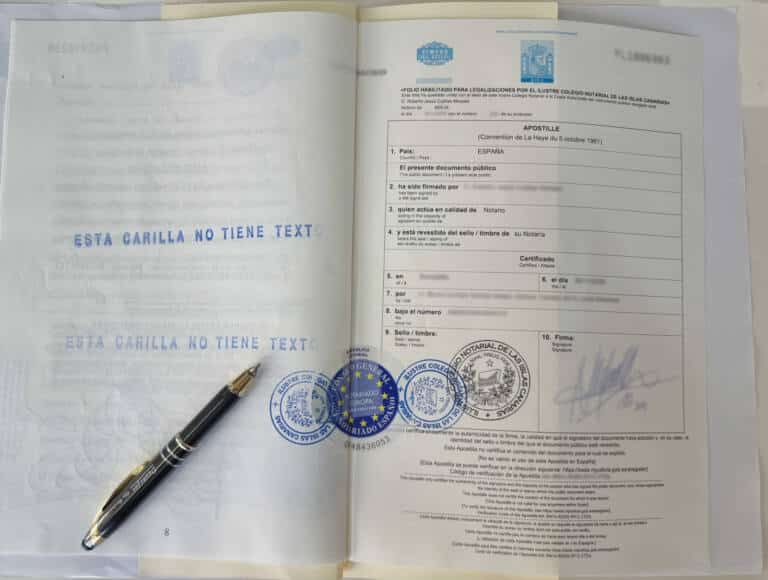
The Hague Apostille is the stamp certifying that a Spanish public document is authentic so that it takes effect in the 118 countries party to the Hague Convention. At ElbaTrad we handle the whole procedure: we receive your document, obtain the apostille — an average of 2 working days — and send it back to your home by courier anywhere in Spain. And if you also need the sworn translation of the apostilled document, we do both in a single order.
Free, no-obligation quote · Last updated: August 2026
Request your quote
Send us your document and we reply with price and turnaround, no obligation.
Send my document- Average of 2 working days
- Courier across Spain
- Over 400 Google reviews
- Optional MAEC sworn translation
What is the Hague Apostille?
The apostille is a certification created by the Hague Convention of 5 October 1961 that authenticates the signature, seal or stamp of the authority that issued a public document. With it, the document is recognised in any State party to the Convention without any need for diplomatic or consular legalisation.
In short: if you are going to submit a birth certificate, a criminal record certificate, a power of attorney or a degree in another Convention country, that country will want to check the document is genuine — and the apostille is the standardised way of proving it. The international body that administers the Convention is the Hague Conference on Private International Law (HCCH).

| Type of document | Examples | Apostille required? |
|---|---|---|
| Judicial | Judgments, orders and rulings issued by judges or magistrates, in contentious or voluntary jurisdiction. | Yes, to take effect abroad. |
| Administrative | Birth, marriage and death certificates, criminal record certificates, academic degrees, certificates of empadronamiento. | Yes — the most common case. |
| Notarial | Powers of attorney, deeds, minutes and official authentications of private documents. | Yes, on the notarial certification. |
| Diplomatic or consular | Documents issued by embassies and consulates. | No: they fall outside the Convention. |
When does the Hague Apostille expire?
It is the most repeated question, and the short answer is that the apostille itself does not expire: it follows the fate of the document it certifies. If the document has limited validity, the apostille lasts as long as the document does; if the document never expires, neither does the apostille. Apostilling a document never extends its validity.
Degrees and documents without an expiry date
A university degree or any other academic qualification has no expiry date, so neither does its apostille. You can have it apostilled today and submit it years later without repeating the procedure.
Certificates with limited validity
Birth, marriage and death certificates generally expire after 3 months. Once that period is over you will need a new certificate and a new apostille, so request it when your procedure already has a date.
Do you also need a sworn translation? The order matters. If the destination country does not speak Spanish, the apostilled document will also need a sworn translation — and it is best to apostille before translating, so that the apostille itself is translated too and you don’t have to order twice. At ElbaTrad we handle both in a single order: we apostille your document and, once the stamp is on it, our MAEC-appointed sworn translator translates document and apostille together.
How do we apostille your document?
No queues and no chasing counters: you get the document to us and we take care of the rest, with final delivery to the address you tell us.
-
Send us the document
Bring it to our office in Adeje or send it by courier. For documents from Argentina, Colombia and Venezuela we accept digital submission by email.
-
We apostille it for you
Once the quote is confirmed, we process the apostille before the competent authority. It takes an average of 2 working days.
-
Optional sworn translation
If the apostilled document is going to a country that doesn’t speak Spanish, a sworn translator appointed by the MAEC translates it — apostille included — in the same order.
-
You receive it at home
We let you know as soon as it is ready and send the apostilled document by courier anywhere in Spain. For Argentina, Colombia and Venezuela, delivery is by email.
Is the apostille valid in your country? Check here
The apostille takes effect in the 118 States party to the Hague Convention. Type the destination country and find out instantly whether your apostilled document will be recognised there. If your country doesn’t appear, all is not lost: you will need legalisation through diplomatic channels, and we can guide you on that too.
- Albania
- Andorra
- Antigua and Barbuda
- Argentina
- Armenia
- Australia
- Austria
- Azerbaijan
- Bahamas
- Bahrain
- Barbados
- Belarus
- Belgium
- Belize
- Bolivia
- Bosnia and Herzegovina
- Botswana
- Brazil
- Brunei
- Bulgaria
- Burundi
- Cape Verde
- Chile
- Colombia
- Cook Islands
- Costa Rica
- Croatia
- Cyprus
- Czech Republic
- Denmark
- Dominica
- Dominican Republic
- Ecuador
- El Salvador
- Estonia
- Eswatini
- Fiji
- Finland
- France
- Georgia
- Germany
- Greece
- Grenada
- Guatemala
- Guyana
- Honduras
- Hong Kong
- Hungary
- Iceland
- India
- Ireland
- Israel
- Italy
- Japan
- Kazakhstan
- Kyrgyzstan
- Latvia
- Lesotho
- Liberia
- Liechtenstein
- Lithuania
- Luxembourg
- Macao
- Malawi
- Malta
- Marshall Islands
- Mauritius
- Mexico
- Moldova
- Monaco
- Mongolia
- Montenegro
- Morocco
- Namibia
- Netherlands
- New Zealand
- Nicaragua
- Niue
- North Macedonia
- Norway
- Oman
- Panama
- Paraguay
- Peru
- Philippines
- Poland
- Portugal
- Romania
- Russia
- Saint Kitts and Nevis
- Saint Lucia
- Saint Vincent and the Grenadines
- Samoa
- San Marino
- Sao Tome and Principe
- Serbia
- Seychelles
- Singapore
- Slovakia
- Slovenia
- South Africa
- South Korea
- Spain
- Suriname
- Sweden
- Switzerland
- Tajikistan
- Tonga
- Trinidad and Tobago
- Tunisia
- Turkey
- Ukraine
- United Kingdom
- United States
- Uruguay
- Uzbekistan
- Vanuatu
- Venezuela
That country is not among the signatories: your document will need legalisation through diplomatic channels instead of an apostille. Tell us your case y le indicamos el camino.
The United States, the Netherlands and the United Kingdom include their associated territories. Indicative list: you can check the current status of the Convention on the HCCH portal.
Frequently asked questions about the apostille
How long does the Hague Apostille take?
With our service, the apostille takes an average of 2 working days from the moment we confirm the quote, plus courier time each way. If you also order the sworn translation, we confirm the combined deadline in writing in your quote.
How much does it cost to apostille a document?
It depends on the type of document, the number of documents and whether you also need the sworn translation. Tell us which document you have and for which country, and you will receive a free, fixed quote before deciding, with no obligation whatsoever.
Where is a document apostilled in Spain?
Depending on the type of document, the apostille is issued by the competent bodies of the Ministry of Justice, the notarial associations or the high courts of justice (you can check the official procedure at mjusticia.gob.es). Our service exists precisely so that you don’t have to work out which one applies or travel anywhere: we handle it for you.
Apostille or legalisation: which does my document need?
If the destination country is a party to the Hague Convention, the apostille is enough. If it isn’t, the document needs legalisation through diplomatic channels, a longer procedure involving several bodies and the consulate. Use the search tool on this page to check your country in seconds.
Does the apostille have to be translated too?
Yes, whenever the receiving authority does not work in Spanish: the sworn translation must be complete and include the apostille stamp. That is why the correct order is to apostille first and translate afterwards — and why we offer both services in a single order, with MAEC-appointed translators.
Can I complete the whole procedure remotely?
Yes. You can send us the document by courier from anywhere in Spain and receive it back, apostilled, at your address. For documents from Argentina, Colombia and Venezuela, both submission and delivery are done by email, with no paper involved.