
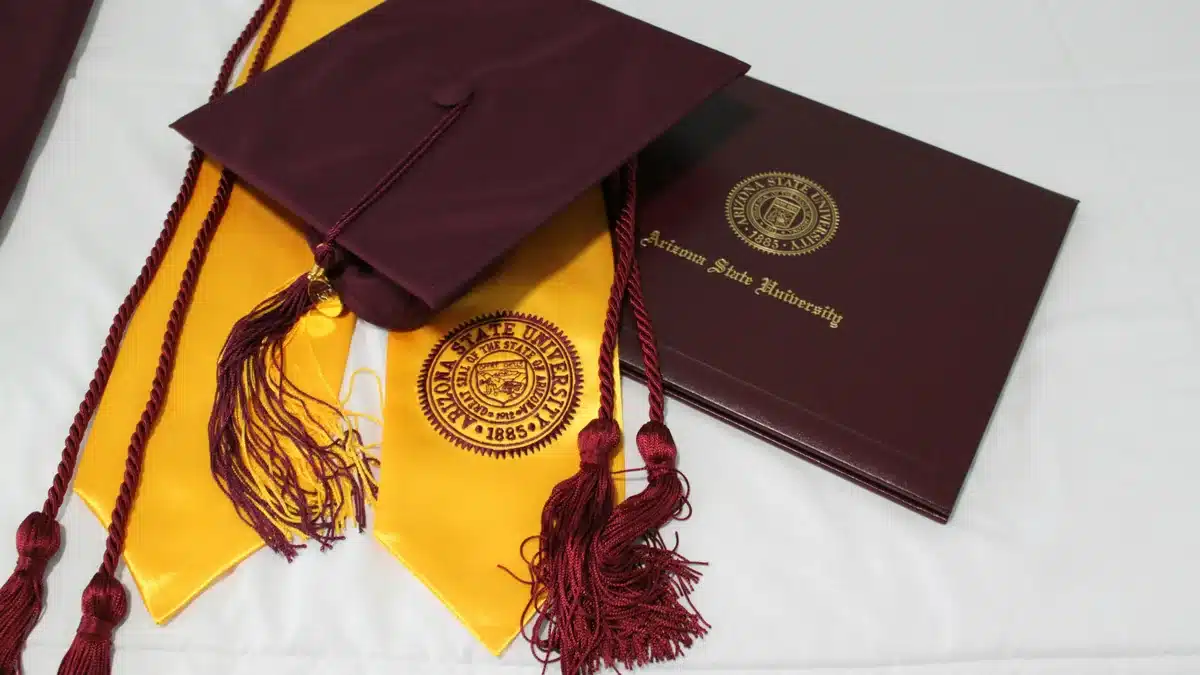
For foreign degree recognition in Spain you will need, at minimum, sworn translations of your degree certificate and your academic transcript (the complete record). Depending on the route and the profession, course syllabuses and other paperwork may be added.
Everything not issued in Spanish has to be officially translated. And if a document needs an apostille, the apostille gets translated too.
Let’s go document by document — it is how you avoid paying for translations you don’t need, or falling short on the file.
The degree certificate
This is the core document of the file. You submit the official certificate issued by your university, legalised or apostilled where the issuing country requires it, and with its sworn translation into Spanish.
Degree not physically issued yet? It happens all the time — in many countries it takes months. In that case the interim certificate or official confirmation that the degree is in process is usually accepted. Confirm it on the portal before filing.
The academic transcript
This is the document that raises the most questions and gets rejected most often for being incomplete. It must show the official length of the studies, the subjects taken and the grades. The sworn translation reproduces all of it: subject names, grading scales, credits, stamps and signatures.
The sworn translator does not convert your grades into the Spanish system. The translation faithfully reproduces what the document says: if your scale is A to F or 1 to 5, that is what will appear. Grade-average equivalence, where needed, is a separate Ministry procedure with its own official tool.
Course syllabuses
They are not requested in every case, but they are when study plans have to be compared — common in regulated professions or when the Ministry requires complementary training. They are long documents, so find out early whether your case needs them: it is the difference between translating twenty pages or two hundred.
A practical tip: ask your university for the official stamped version of the syllabuses from the year you took each subject, not the current version of the study plan.
Identity document and the rest
For identity, remember what we covered in the degree recognition guide: you can register on the portal with your passport, but the Ministry is currently requiring a valid DNI or NIE in certain files in order to continue.
Depending on the case you may also need: a certificate from your university confirming the degree gives access to the profession in your country, proof of language competence where the profession requires it, or route-specific paperwork. The fee receipt needs no translation.
Summary table: what gets translated and what doesn’t
| Document | Sworn translation? | Apostille first? |
|---|---|---|
| Degree certificate | Yes, if not in Spanish | Depends on country; EU, EEA and Switzerland exempt — the UK is not, post-Brexit |
| Academic transcript | Yes, in full | Depends on country; EU, EEA and Switzerland exempt |
| Course syllabuses | Only if your route requires them | Check your case |
| Passport / identity | No, unless requested | No |
| Fee receipt | No | No |
The right order: legalise, translate, file
If your document needs an apostille or legalisation, that step comes first and goes on the original; the sworn translation is done afterwards and includes the apostille. Translate before legalising and the translation is incomplete, can be rejected, and has to be done twice.
Academic documents issued in the EU, the EEA and Switzerland are exempt from legalisation in this procedure, so there you can go straight to the translation. British documents, since Brexit, generally do need the FCDO apostille first.
Frequently asked questions
Do I need to translate the entire study plan?
Only if your route requires it. Before ordering anything, confirm on the portal what your specific case asks for. If in doubt, send us the list and we will tell you which documents need sworn translation and which don’t.
My transcript uses a different grading system — does the translator convert it?
No. The sworn translation faithfully reproduces the original grades. Grade-average equivalence is a separate Ministry procedure with its own official tool, and many bodies ask for both: the translation and the equivalence.
Can I file the translations digitally?
The application is filed through the electronic portal, and sworn translations can be issued with the translator’s electronic signature. It is the natural format for this procedure — just keep the originals in case they are requested.
Is a certified translation from the UK or US valid?
In Spain, legal validity lies with translations by sworn translators appointed by the Spanish Ministry of Foreign Affairs. Certified translations from other countries can be admitted in some cases with additional legalisation, but they are frequently rejected. The safe route is translating in Spain.
Remember: our work is the sworn translation of your documents; recognition itself is applied for before the Ministry. The full process is in our degree recognition guide.
This guide is for information only. Specific requirements are set by each authority and can change, so always confirm with the body receiving your documents before starting a procedure.